
Notes for your project
Loading, narrow access & working hours
Plan the journey in stages: the permitted vehicle route, the unloading point, the carrying route and the place where equipment will stand. A convenient time for the occupier must also work for the street and the building.
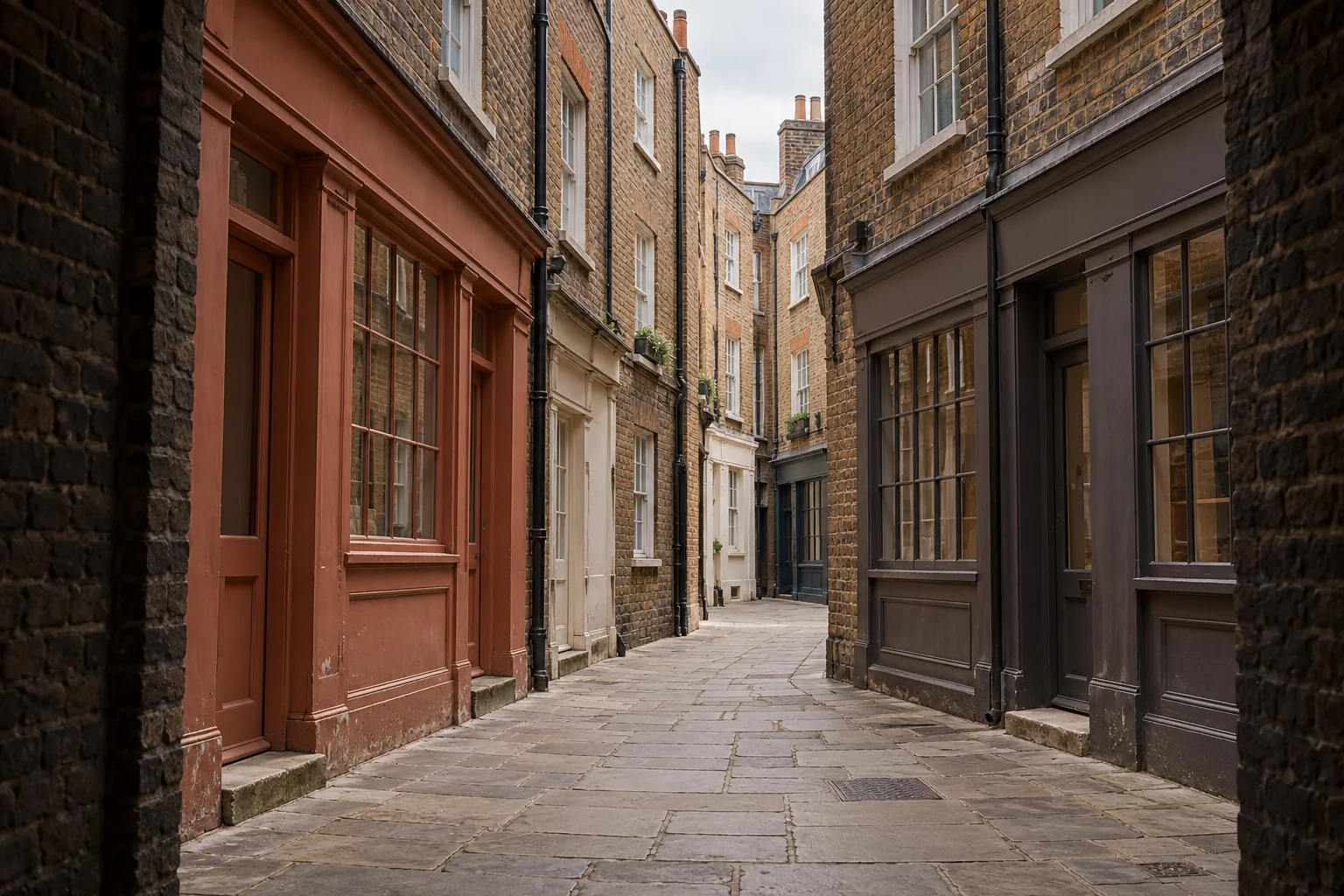
Loading permission is tied to the location
Westminster allows loading in specified locations subject to restrictions and requires continuous loading activity to be evident. Its guidance also identifies places where loading is prohibited, including loading bans and suspended bays. Check the signs at the intended stop and the route to it. For Carnaby or Kingly Street, confirm the timed access arrangements before committing a delivery slot.
Sources: Westminster: loading and unloading rules; This is Soho: Carnaby and Kingly Street visitor access
Choose the right parking arrangement
The council accepts parking-bay suspension applications for building works and publishes a ten-working-day notice requirement. Check the particular bay and current booking conditions before arranging transport. If the vehicle needs to remain while work is carried out, review the appropriate suspension, dispensation or trade-parking option. A delivery instruction should name the approved arrangement rather than assume the kerb outside will be free.
Sources: Westminster: parking-bay suspensions for works; Westminster: loading and unloading rules
Account for the structure and the waste separately
Westminster’s highway guidance requires a temporary-structure licence for work extending onto or over the public highway. A skip placed in the street needs its own licence. Establish who applies, where the equipment will stand and how pedestrians will pass before including it in a programme. Parking permission alone does not determine the acceptability of a scaffold, platform or skip.
Sources: Westminster: temporary structures and highway access; Westminster: skip licensing route
Use the published hours as the starting point
Westminster lists standard construction hours as 8am–6pm on weekdays and 8am–1pm on Saturdays; Sundays and bank holidays are outside that period. The council has an out-of-hours approval route and directs construction or street works extending beyond three consecutive evenings or nights to Section 61 prior consent. Check the required route for the actual activity and duration before arranging alternative hours.
An overnight closure needs a complete task list
If a restaurant, bar or studio requests night or early-morning decoration, describe sanding, equipment assembly, material movements and application individually. Supply the building’s restrictions and relevant premises conditions with the request. Include neighbouring homes in the assessment and agree the permitted tasks in writing. A quieter painting stage should not be used to assume permission for the whole shift.
Check the vehicle as well as the route
Use TfL’s current Congestion Charge information for the travel date and its vehicle checker for ULEZ. The schemes have different operating arrangements and exemptions; ULEZ runs around the clock except on Christmas Day. Keep any applicable charging requirement separate from the permission to park or unload. Include the final carrying route inside the property when assessing delivery practicality.
Sources: TfL: Congestion Charge and travel-date checks; TfL: ULEZ and vehicle checker
Tell us what you have in mind
A room. A frontage.
A place to begin.
Share the Soho property address and a short outline of the work. For occupied premises, add the hours the space can be released and any instructions from the person managing the building.
Introduce your project
A little about the rooms, their condition and your intended finish will help frame the conversation.